Documentation
How to take part as a participant, a judge, or an admin.
Participants
Build a project with your team and submit it before the deadline.
Sign up
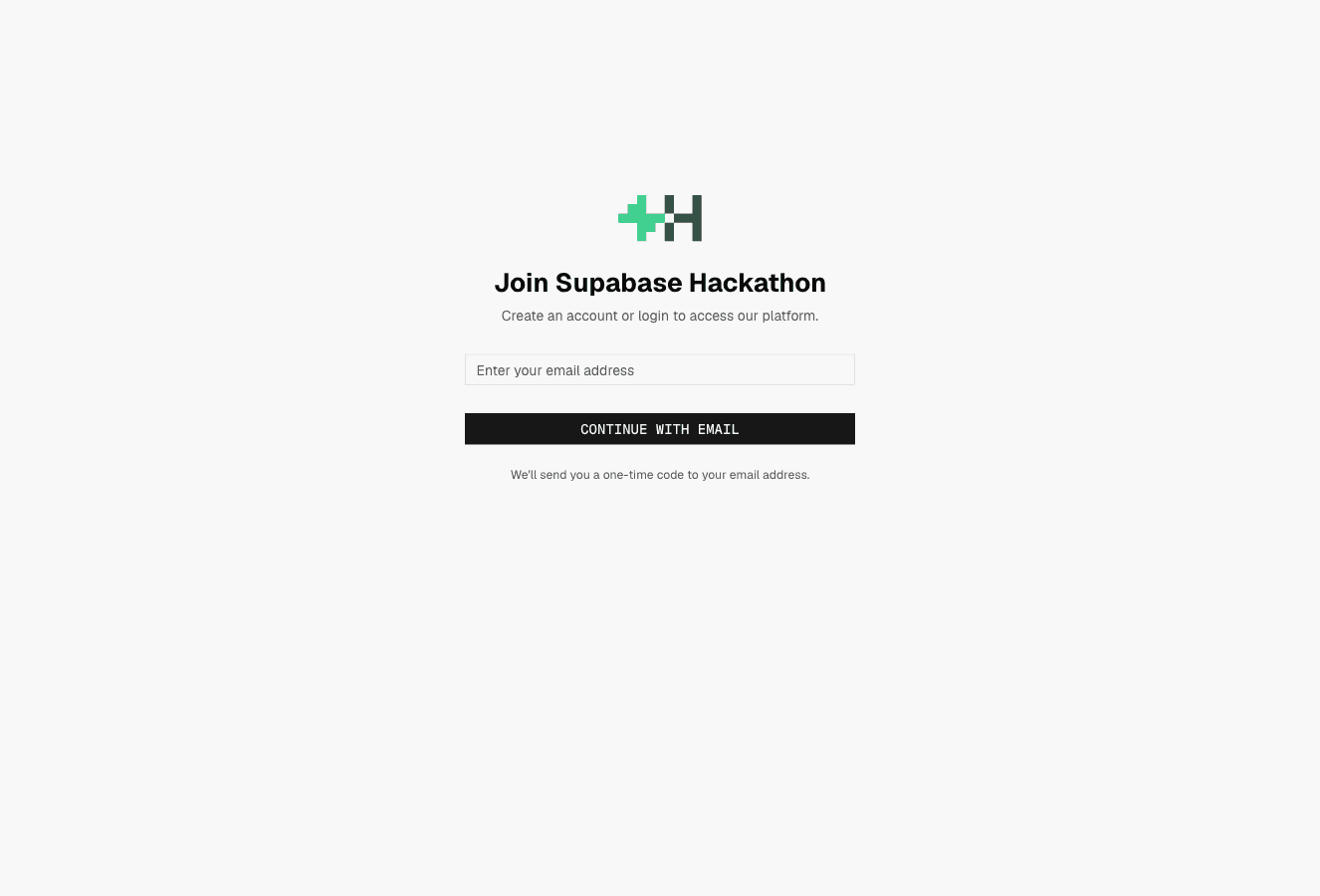
You sign in with a magic link. Enter your email and we send you a link that signs you in. There is no password to remember. The first time you sign in, we ask for your name.
- Open the app and click Sign in.
- Enter your email and request the link.
- Open the email from us and click the link. It signs you in and brings you back to the app.
- The first time, enter your first and last name.
Create a team
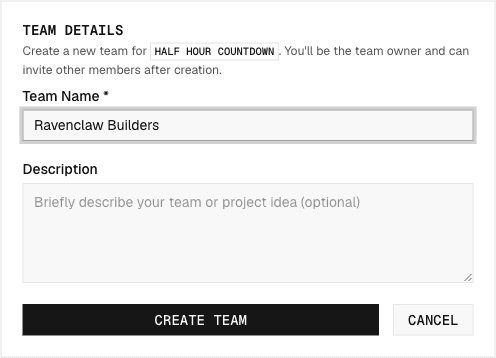
Every project belongs to a team, even a team of one. Create your team before you start building. You become the team owner.
- Open Teams and click Create a team.
- Name your team.
- You are now the owner and can invite others.
Invite teammates
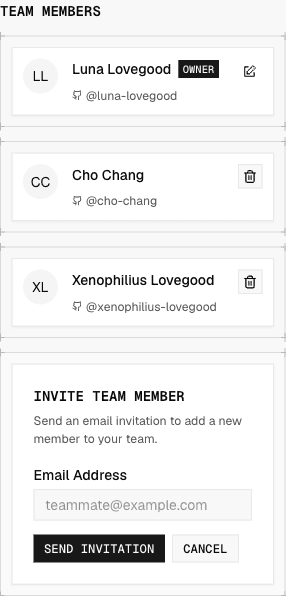
Add the people building with you. We email each of them an invite link. They click it, sign in, and join your team.
- Open your team page.
- Enter a teammate's email and send the invite. Add more than one at a time if you need to.
- Pending invites show on the team page. Resend one if it expired or did not arrive.
Set up your profile
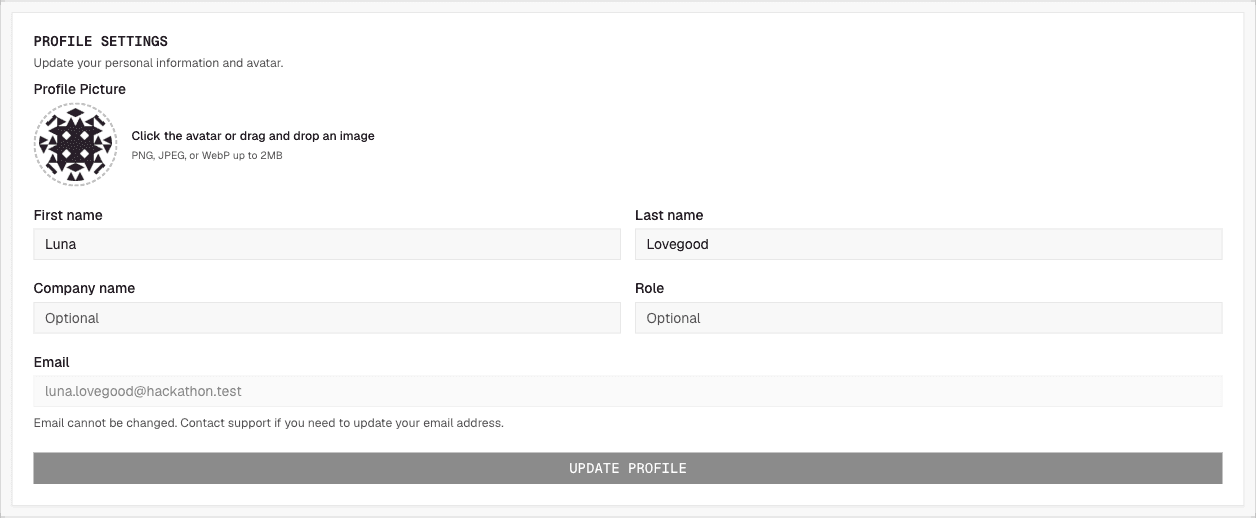
Your profile is how you appear to teammates, judges, and our partners. Add your company, role, and social handles, and upload a photo. Without a photo we show your Gravatar.
- Open Settings.
- Fill in Profile Settings: name, company, role, and photo.
- Add your Social Handles.
Submit a project
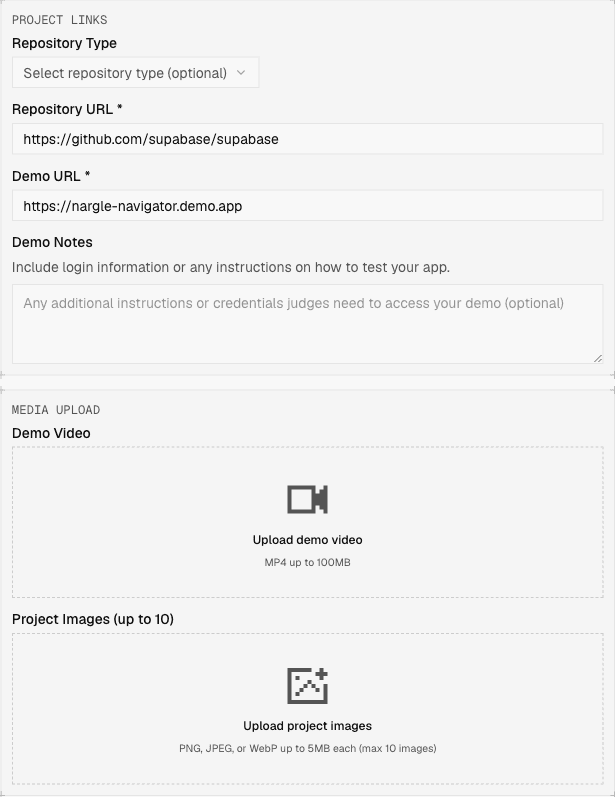
Open your team's project and fill in the title, description, the coding tools you used, your repository link, a demo link, and screenshots. You can submit as soon as the event opens, and you can keep editing after you submit.
Always submit by the deadline
The editor shows a live countdown to the deadline.

Secrets to a great submission
A judge spends a few minutes with your project.
- Add screenshots. Show the product before a judge opens anything.
- Add a good demo video. A short walkthrough beats a cold start.
- Include a public repository. Judges look at the code, and you should not expect them to clone and run your project.
- Host your project live so judges can try it in the browser.
- Provide a login and instructions. If the product needs an account, give the judges one that works.
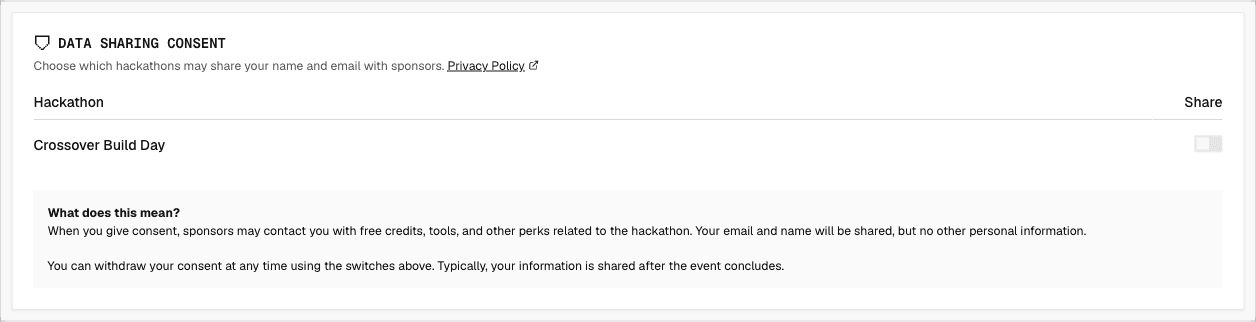
Data sharing consent
We invite partners to take part in our hackathons. You choose whether they get access to your data. In exchange for sharing, you get free stuff. You control this per hackathon from your settings, and you can change your mind at any time.
Fair play
We set the rules up front. Deadlines are one of them. You can bring in code, libraries, even skeleton projects from past work. We welcome it, and we encourage it.
Judges
Score the projects you are assigned, fairly and on time.
Receiving an invitation
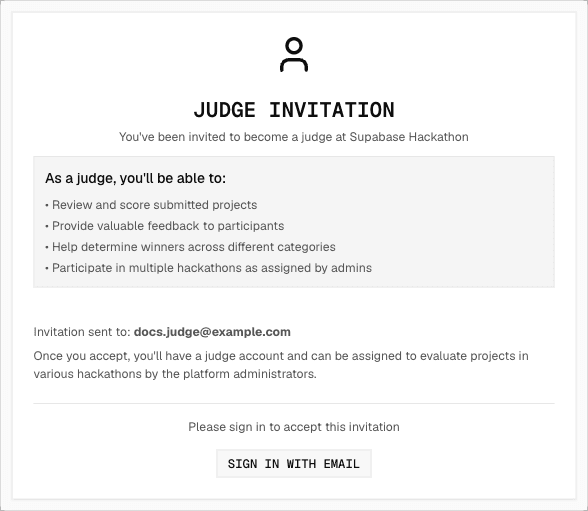
An admin invites you by email. Click the link in the invitation to accept it and create your judge account. If the link has expired, ask the admin to resend it.
Fill out your profile
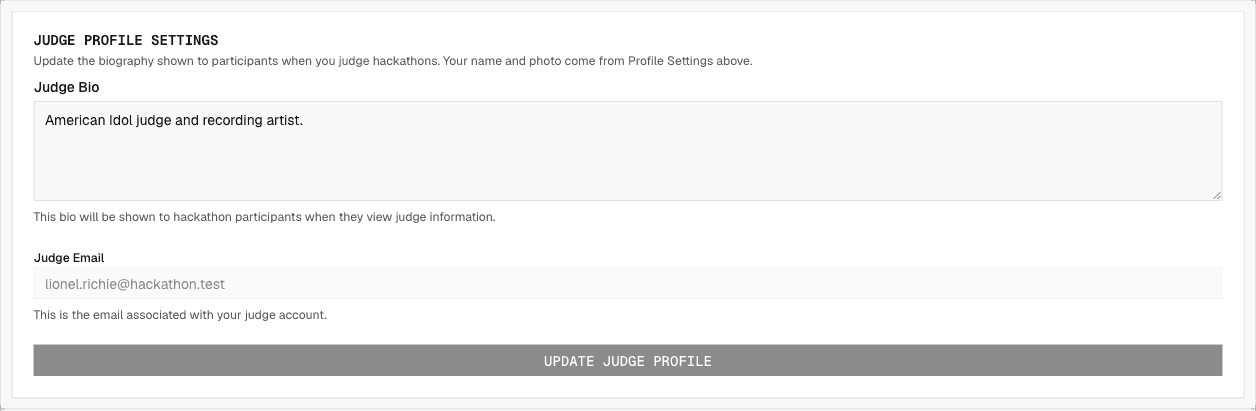
Add your name, photo, and a short bio. Participants see your bio when they view judge information. Write a sentence or two on your background and what you look for in a project.
- Open Settings.
- Set your name and photo in Profile Settings.
- Write your Judge Bio in Judge Profile Settings.
Pick a hackathon to judge
Your judge portal lists the hackathons you are assigned to. Pick one to start judging.
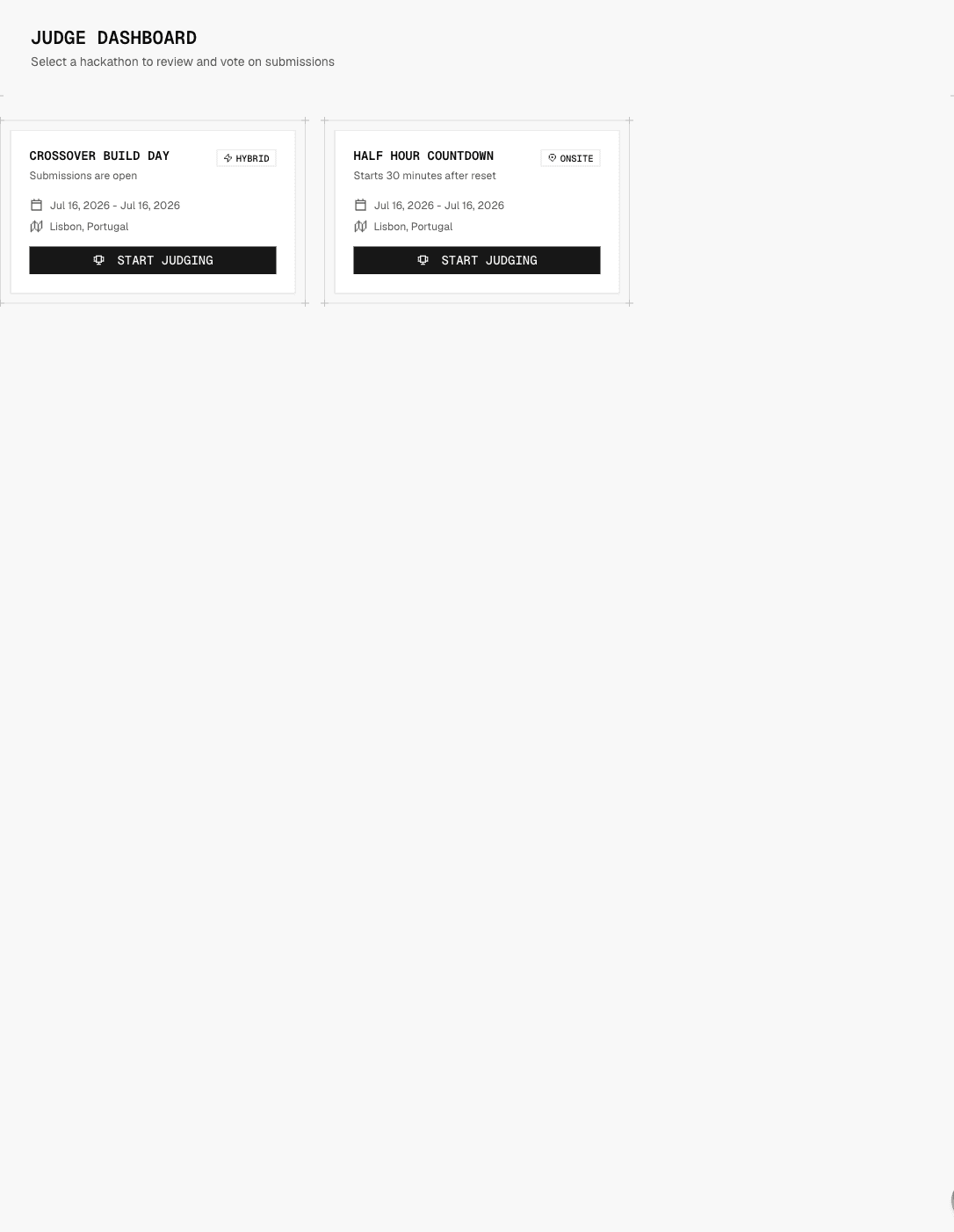
How projects are assigned
Projects are assigned at random across the judging pool. Every project is seen by several judges.
Evaluating a project
Each hackathon has its own criteria. You rate each project on each criterion on a scale of 1 to 5. Open a project to see its details, its repository, its demo, and its screenshots, then score it.
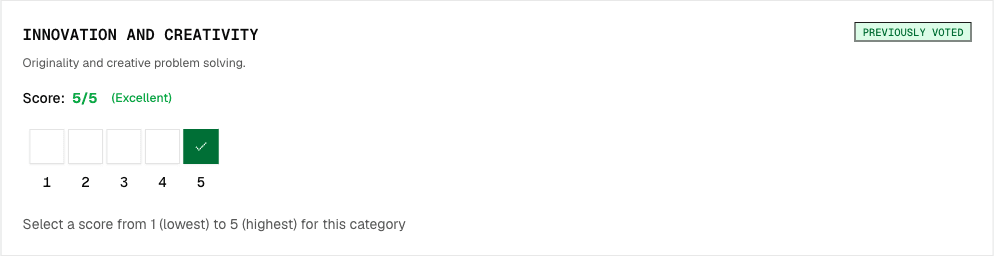
Submitting your votes
Submit your votes once you are done evaluating. You can resubmit up until every project has been judged.

Seeing the results
Click the Overview tab to see the top projects in each category. Once the admins have tallied the total results and announced finalists, they appear in the dashboard too.
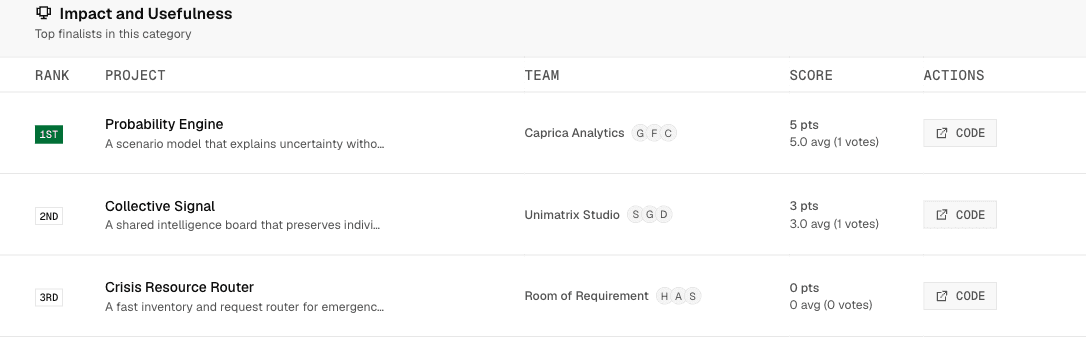
Generating a participation letter
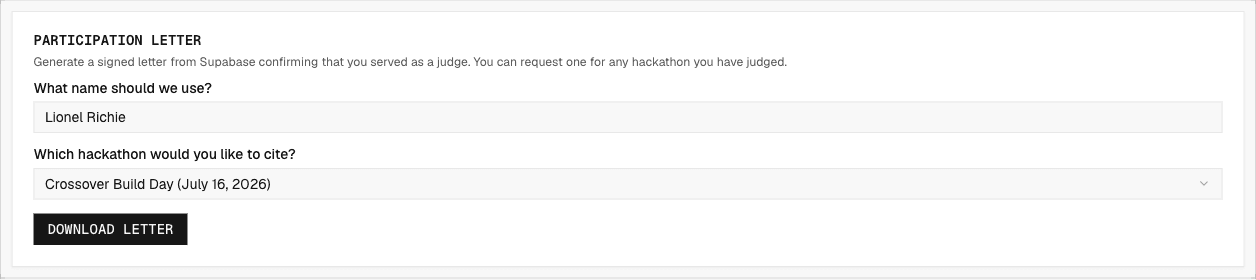
If you need acknowledgement from Supabase about your participation, you can download a PDF on Supabase letterhead with a letter from our Head of Product Marketing.
- Open Settings.
- Find Participation Letter under Judge Profile Settings.
- Choose the hackathon you judged and download the PDF.
Admins
Run the event: set it up, invite judges, and manage the results.
Create a hackathon
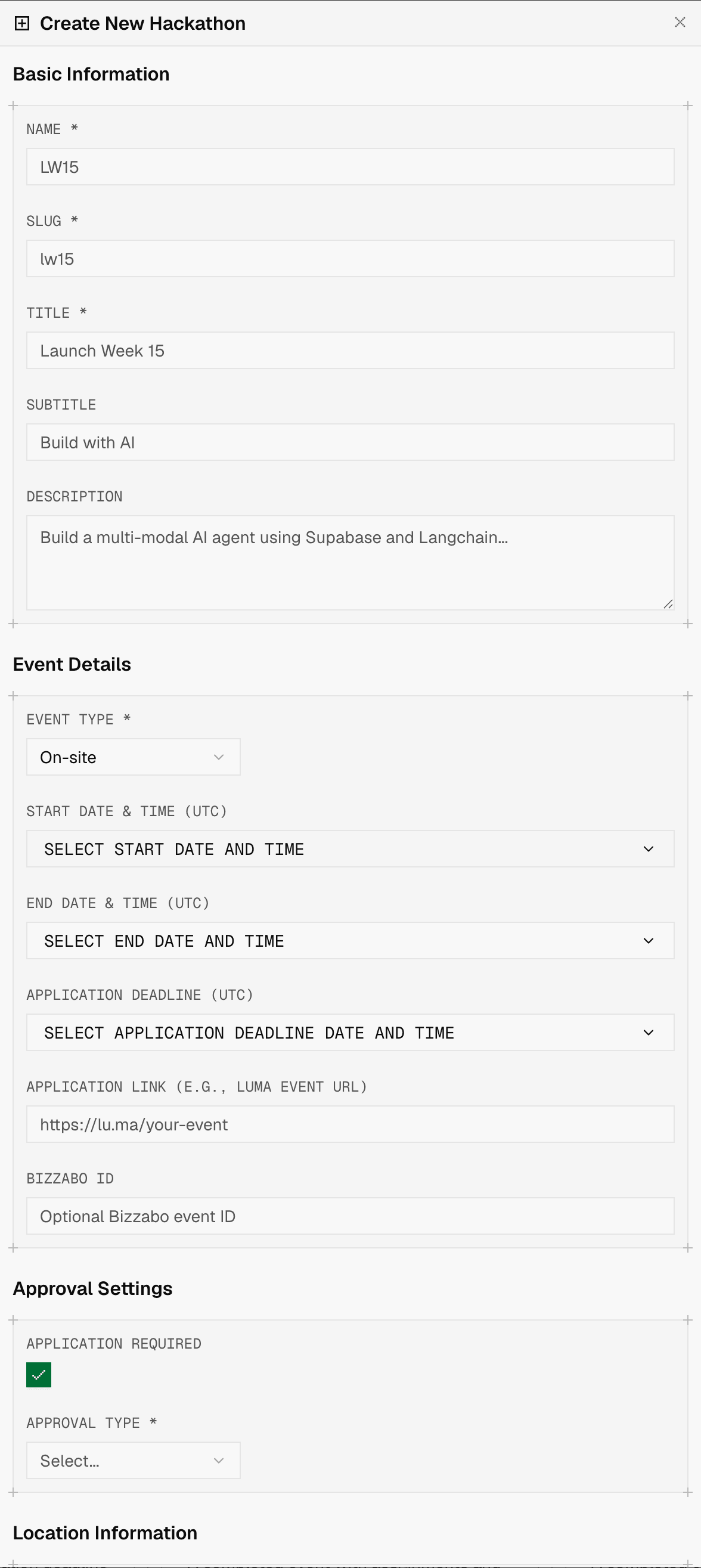
Create the event from the admin console. Set its name, dates, and the registration and submission deadlines. For onsite and hybrid events, add the venue.
- Open Admin and go to Hackathons.
- Click Create Hackathon and fill in the details.
- Set the start, end, and deadline dates.
Add a judge
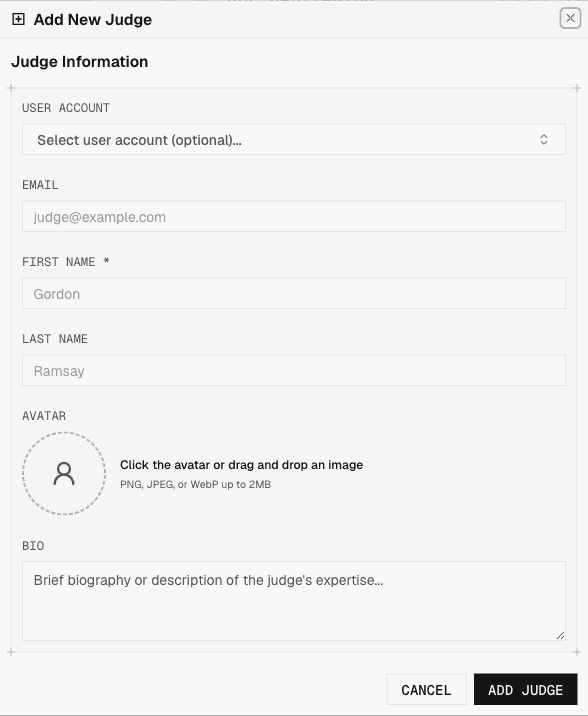
Invite judges by email from the Judges page. Each judge gets an invitation link, accepts it, and creates their account. You can resend an invitation that expired.
- Open Judges.
- Click Add Judge and enter their name and email.
- Assign them to the hackathons they will judge.
Set up categories
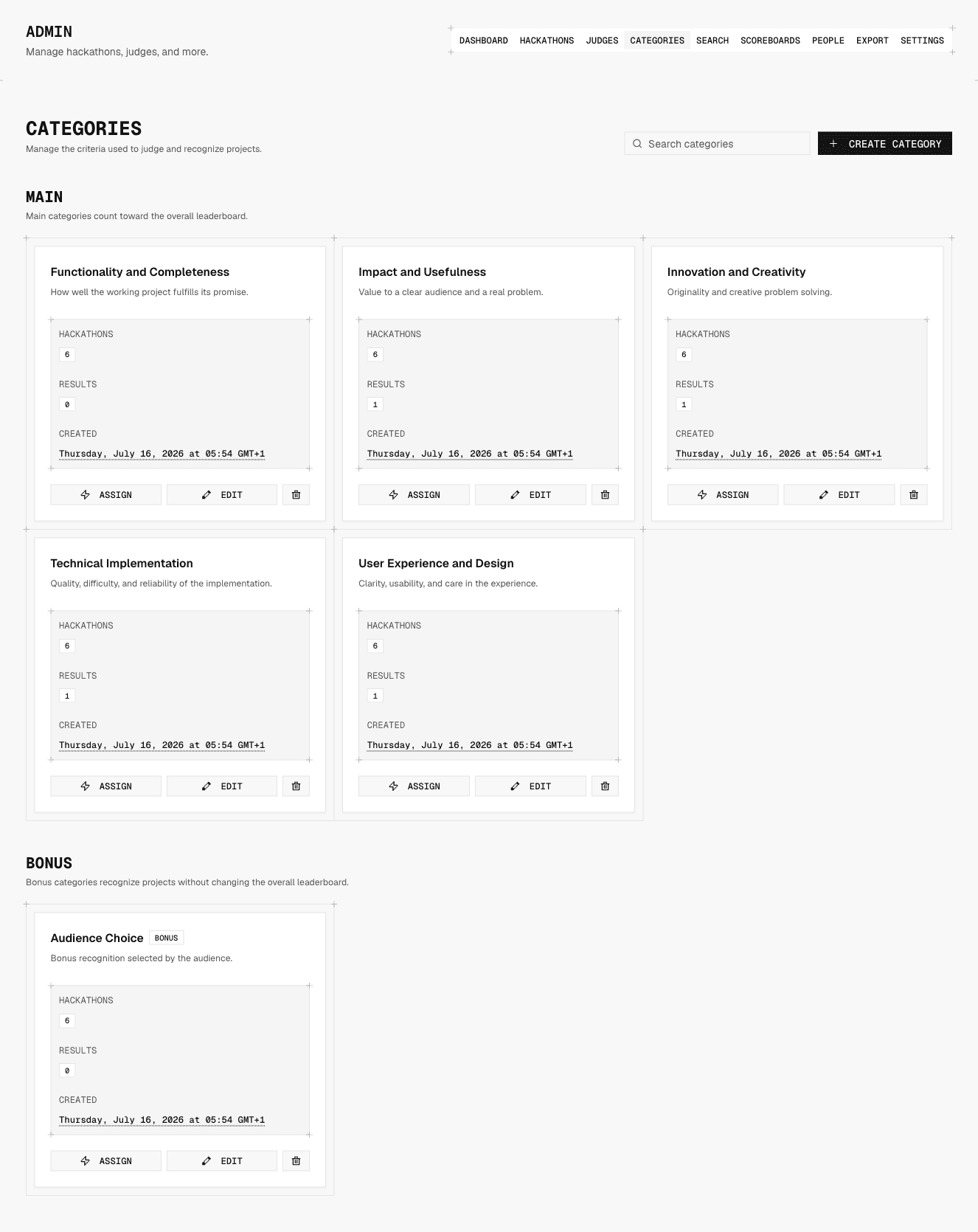
Categories are system-wide. Create them once on the Categories page, then choose which ones apply to each hackathon. Bonus categories recognize projects without changing the main leaderboard.
Kick off judging
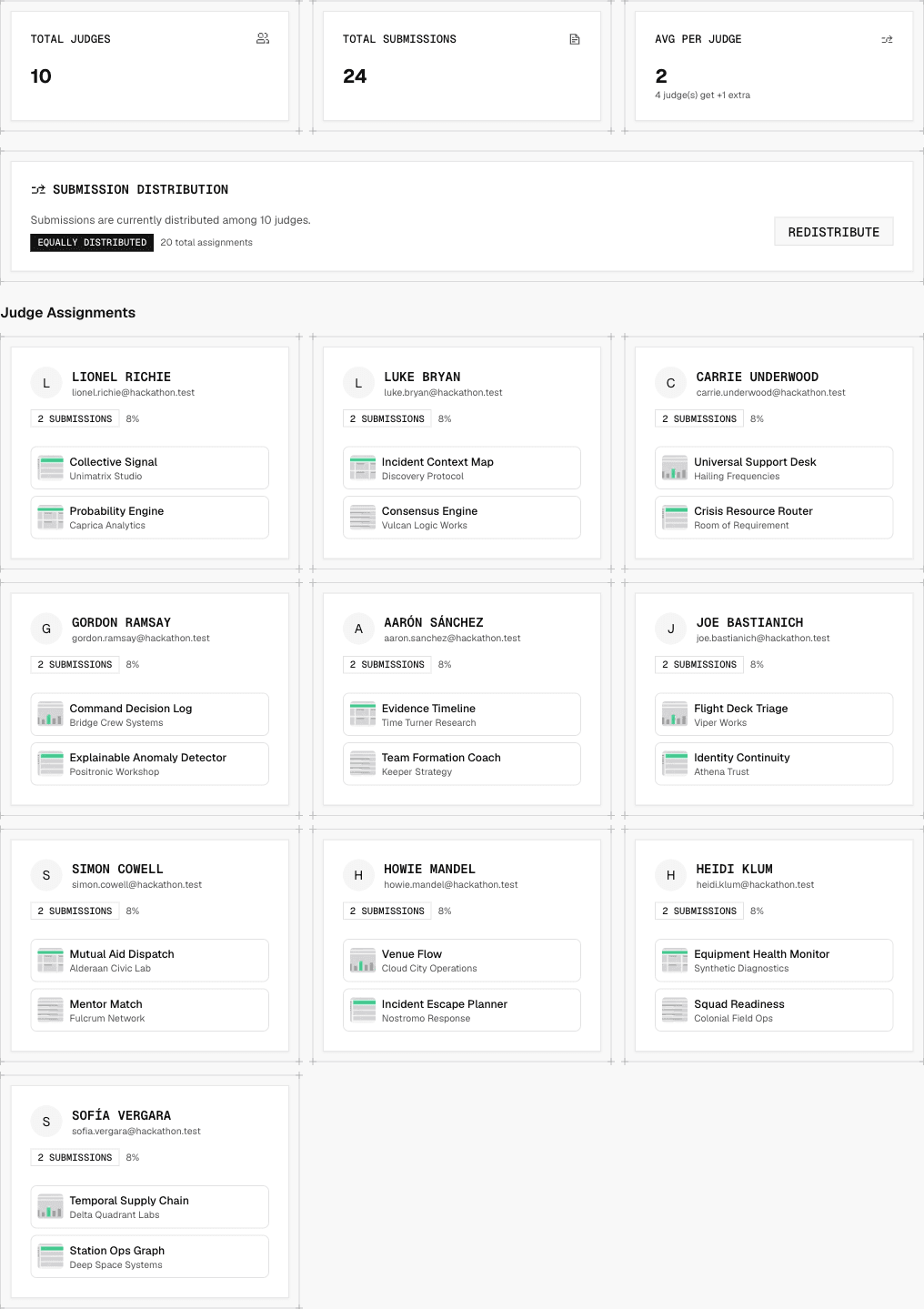
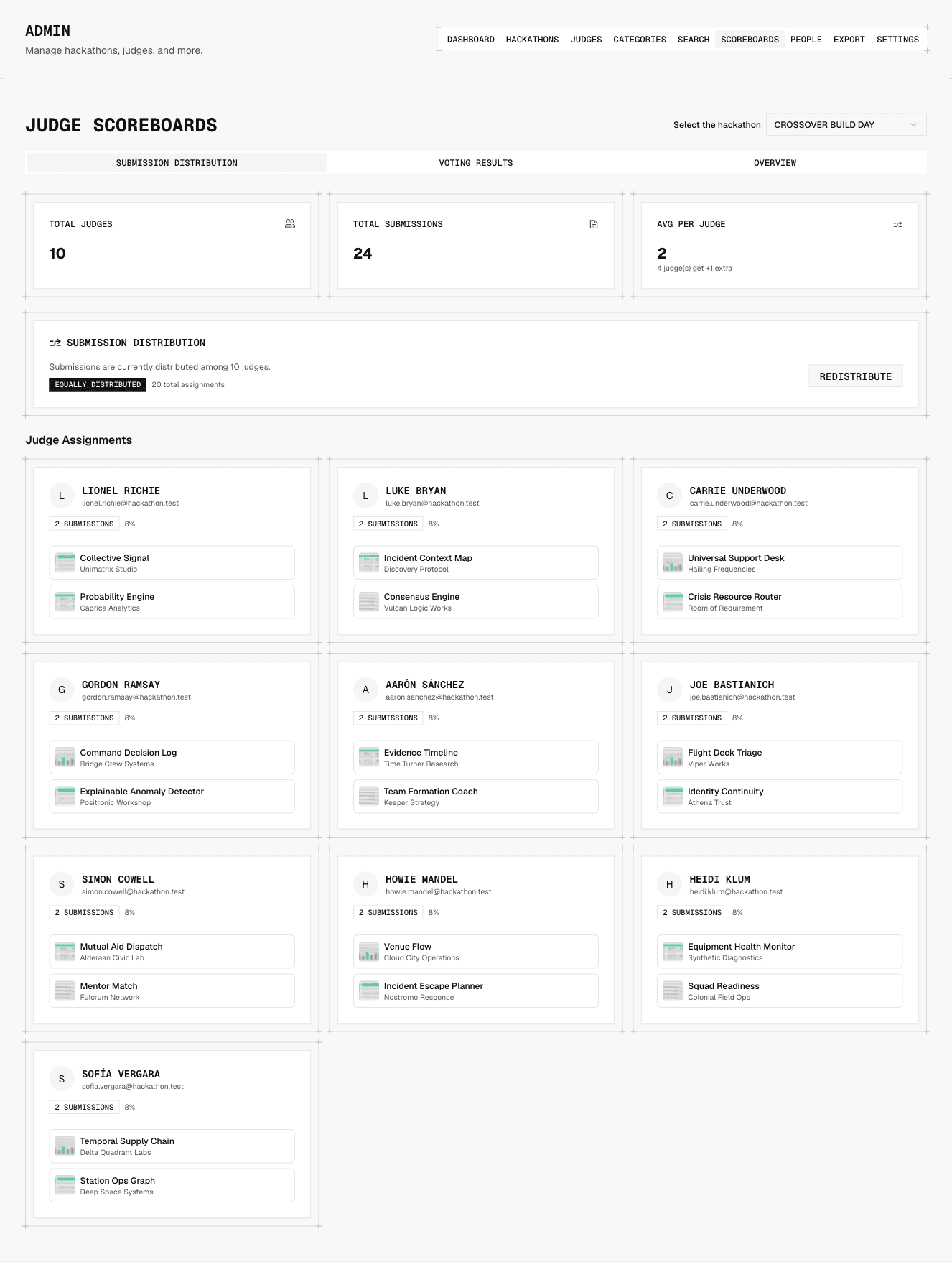
Assign your judges to the hackathon and distribute the projects. The tool assigns projects to judges at random across the pool. Every project is seen by several judges.
View live results
The Scoreboards tab shows judging progress and scores as they come in over Realtime. Use it to watch the event fill in, see the top projects per category, and select finalists and winners.
Handle bad actors
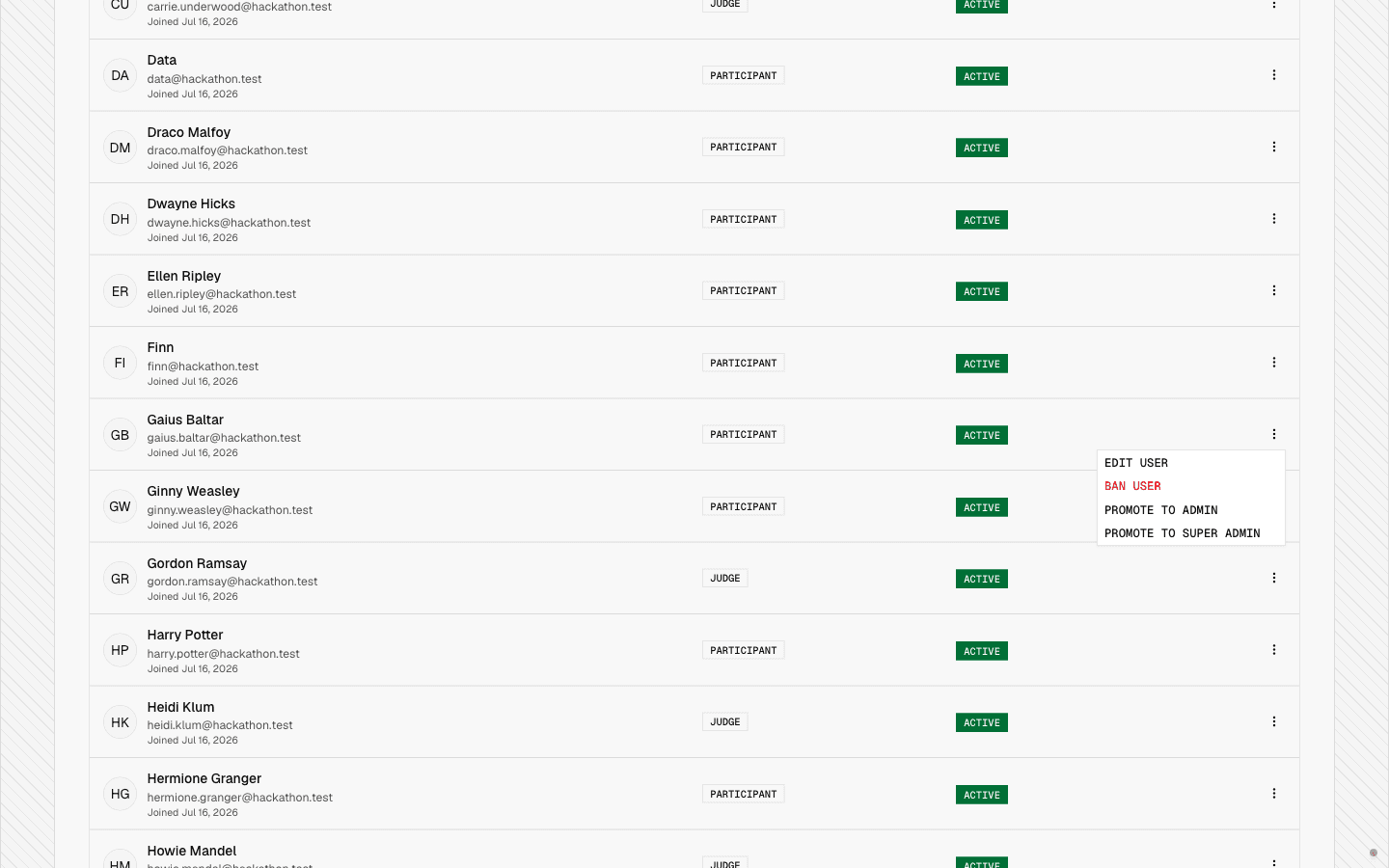
Super admins manage people from the People tab. Search for a person, open them, and ban them to block their access and stop repeat applications. You can reactivate a banned account later.
- Open People and find the person.
- Open their actions and choose Ban.
- Reactivate from the same menu if you need to.
Fair play
You set the rules and the tool enforces them. Deadlines are fixed and cannot be moved, by judges or by admins.
We encourage participants to reuse code, libraries, and skeleton projects from past work.